Chucking disease grips juniors
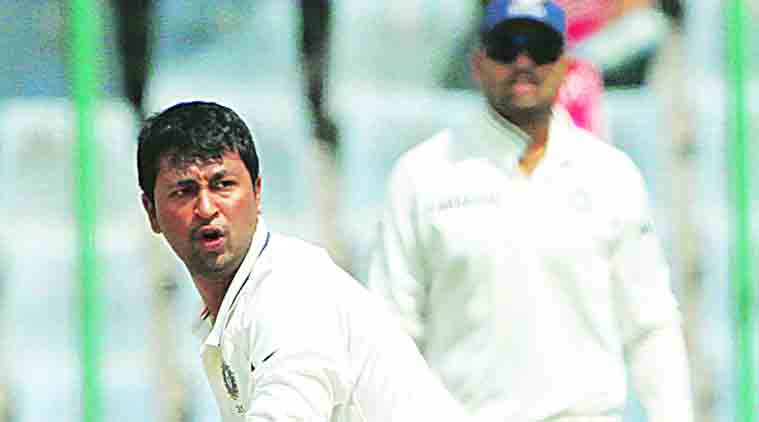 Pragyan Ojha was banned from bowling in competitive cricket in December after found to be flexing his elbow more than 15 degrees.
The kids are chucking across the country. In a startling development, the Board of Control for Cricket in India (BCCI) has called about 110 bowlers – about 80-90 are from junior cricket — for chucking or having suspect bowling actions while playing in domestic cricket in various age-group tournaments.
The effects of watching bowling heroes merrily chucking in international cricket on kids playing cricket has long been wondered and fretted upon. And the evidence is here now. A chucking spree is on and the Indian cricket board is trying hard to stamp it out from the junior level. Besides juniors, some 15-20 bowlers are from the senior level, including those who have played Ranji Trophy.
The BCCI recognises the problem and is trying to put systems in place. “Junior cricket is the place where we can stop them. It’s too tough to call a bowler once he has bowled with such an action for a long time. There has been instances where an India Under-19 player was called for illegal action when he went to play the ICC Under 19,” said Ratnakar Shetty, BCCI’s game development manager.
Out of the 110 bowlers hauled up for possessing dodgy actions, only two were cleared by the Sri Ramachandra Medical College (SRMC) in Chennai when they went there for tests. The rest of them were advised to change their action a bit.
The BCCI has tied up with SRMC, which is also accredited by the ICC (International Cricket Council) as a testing centre for suspected illegal bowling action. Shetty informed that the board has adopted a strict policy when it comes to chucking. “We have told our umpires to be very strict with this. Umpires can watch videos and can also report once the match is over. We have technology in place for each game. There are cameras which record each game so that umpires can better judge a bowler’s action. We should see to this that bowlers, who chuck don’t get away with it,” Shetty said.
The BCCI has given freedom to umpires to call bowlers if they find them suspicious. “We have facilities now in Chennai which has got its accreditation from the ICC. Earlier we needed to send videos to Australia, but now we can send suspect bowlers to SRMC. Somewhere we need to stop it,” Shetty added. Just a few weeks ago, left-arm spinner Pragyan Ojha was banned from bowling in competitive cricket as his elbow flexed more than the permissible limit of 15 degrees. He had himself requested Hyderabad Cricket Association to allow him to undergo a test on his action at the SRMC. It went against him and later the BCCI banned him.
Nipping it in the bud
“There is no option but to nip it in the bud at a young age. It’s all about muscle memory, you see. The action then becomes difficult to change. It’s like your walking gait. Let’s say after 30 years, someone says your walking technique is all wrong; you will find it immensely difficult to change it. See someone like Saaed Ajmal is finding it difficult to change at this age,” said former India left-arm spinner Murali Kartik.
He also spoke about the scarring effect on the bowlers who are called. “I would like if the spotting of suspect action is done early and quietly. Call the kid aside, tell him or her that you have this problem and correct. At that age, it can also scar you for life if it’s all made public. Remember Mohnish Parmar? Whenever the team was in trouble, they would throw the ball to him. And when it came out that he had a dodgy action, he was discarded quickly. I also remember Kulamani Parida. Off the last ball he was going to bowl in first-class cricket — he had already decided he was going to quit — he was called. What can I say? Such a mess. Hence it becomes all the more necessary that the calling out is done at a young age.”
Kartik, who has played extensively in English country cricket, says it seems a largely a subcontinent problem. “There was James Kirtley, who couldn’t quite come back after he was called. But I don’t remember more cases from England. It seems to be a subcontinent thing. Perhaps, the heroes are flawed, perhaps it’s the system. I also think the flat pitches we have here are a cause. Whatever be the reason, the solution is simple: You have to nip it in the bud.”
CAUGHT IN THE ACT
110 players have been pulled up for suspect action. And disconcertingly, about 80-90 of them are from junior cricket. Sri Ramachandra Medical College is India’s own testing centre now. Previously, videos used to be sent to Brisbane before the bowlers themselves were sent for course correction. It was a time-consuming and expensive procedure.
There were 70 players who had suspect bowling actions when BCCI started the programme to weed out chuckers in 2008. The next year, the number doubled to 135 and the board found that most of the previous offenders, who had “cleared” their action were at it again. They found that the bowlers were using different actions in tests and obviously not replicating it in match conditions.
The BCCI’s bowling action review committee comprises former offspinner and umpire S. Venkatraghavan, Javagal Srinath and umpire A.V. Jayaprakash. Once the umpires identify the bowlers with suspect action, the trio look at the videos. There are as many as six video cameras capturing the images of all matches from the under-16 level.
The trio choose not go by the international 15 degree flexion rule, instead relying on a simpler, human, method. If the bowling (in front of the panel) was different from what they had seen in the video footage, they register it as suspect as they realise the bowler was deliberately trying to change the action in front of them.


