Galle fort, or how to experience all of Goa within a 1-kilometre radius
 While selling houses to foreigners has been suspended by the present government, other high-profile residents have entered the fort, with both Kumar Sangakkara and Mahela Jayawardene having purchased houses, built with shells and limestone, within its confines.
Ever wondered what it would be like to stay inside a fort? Sure you have. Like me, maybe you too have imagined a world of bazaars, quaint little stone houses with wholesome courtyards, and of course a heightened pulpit from where the king would deliver his daily address.
Then you come to the Galle fort. Built in the 16th century by the Dutch—with help from elephants and slaves from the Mozambique as you are duly informed—the fort has survived the test of time, and also the tsunami—though a lot of money has been spent in rehabilitating it. And once you enter through the narrow entrance right opposite the Galle Stadium, you are in the midst of the most eclectic, vibrant and exotic tourist destination within four massive walls. Like experiencing all of Goa within a 1-km radius.
While selling houses to foreigners has been suspended by the present government, other high-profile residents have entered the fort, with both Kumar Sangakkara and Mahela Jayawardene having purchased houses, built with shells and limestone, within its confines.
The fort, which is also referred to as the Ramparts of Galle, itself houses 395 settlements, each numbered, and each offering a fulfilling experience of the old-world. While some are still inhabited by the locals, most of them have been converted into little, inns, hotels, cafes and bars. From the 59-feet tall Lighthouse to the Dutch Reformed Church as well as the Old Dutch Hospital (which now hosts a shopping centre and a number of restaurants), you will hear almost every language spoken around the world. While most of the businesses are still run by locals, you will still bump into a number of English, Dutch and German café and inn owners.
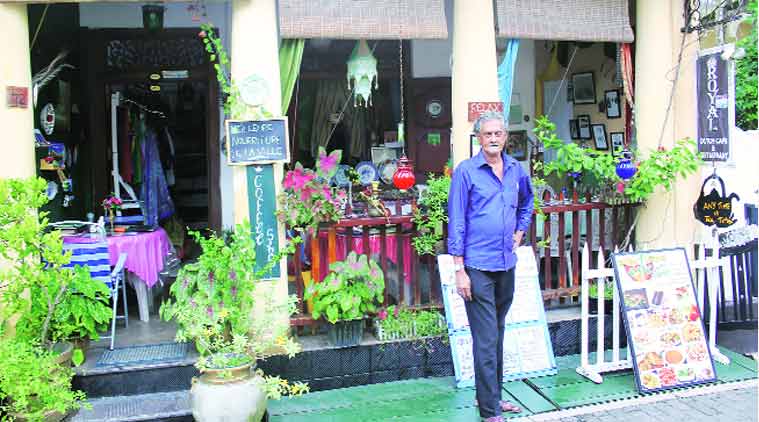
“It wasn’t always like this. Once the war ended, a lot of the locals sold their properties to these foreigners and went away. Mine was the first to be converted into a café,” says Fazal Badurdeen (pictured), who owns the Royal Dutch Café which was started in 1998. The soon-to-be-renovated Sangakkara residence is just two blocks away on the same narrow street. All narrow streets have still retained their European names. You will find Pedlar Street, the busiest of the lot, which is also called the Moorse Kramerstraat. And you have Leyn Baan Street—which houses Badurdeen’s neat restaurant that serves the best tea in the area — and the Zeeburgstraat.
“The Fort is a world in itself. Most are Sinhalese, but once you enter through that narrow tunnel, you are in a place where language, culture and the colour of your skin don’t matter,” says Hemangawarna, the owner of Anura’s Café. “This fort is bliss.”
He couldn’t have put it better.


