Michael Clarke will be remembered for his courage: James Sutherland
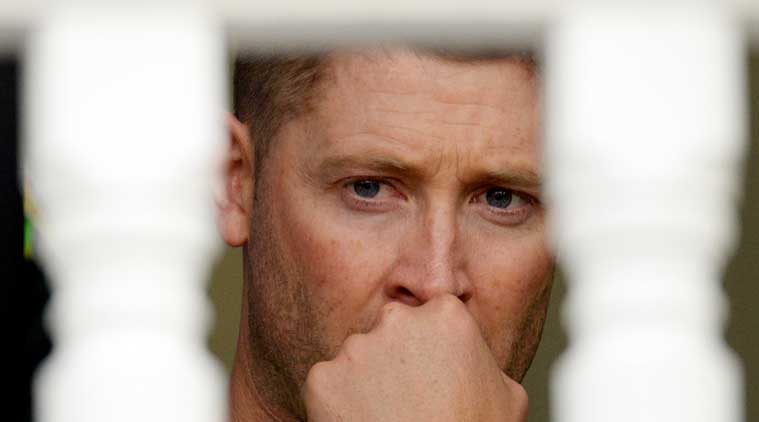 Michael Clarke in a somber mood after Australia’s heavy defeat to England at Trent Bridge. (Source: Reuters)
Michael Clarke would be considered one of the best batsmen of his generation, Cricket Australia chief executive James Sutherland said on Sunday.
“He will be remembered for his courage and the way he played the game,” Sutherland said on Sunday.
“I don’t think I can think of an Australian cricketer that has worked harder, day after day, week after week. He finished on his terms and this (retirement) is a small moment in a great career.”
The 34-year-old Clarke announced on Saturday he will be retiring from Test cricket at the end of the Ashes series, concluding a superlative 12-year international career. Australia lost the series 3-1 after a humiliating defeat at Nottingham, England, by an innings and 78 runs.
The Australia captain scored 117 runs in eight innings during the series, his fourth consecutive Ashes defeat in England. In the past 20 months of Test cricket, Clarke has only passed 50 twice as he struggled with back and hamstring injuries.
Prime Minister Tony Abbott said Sunday that Clarke will be missed as captain.
“He has not only been a great player and leader, I think that he has been a great role model, particularly last year with the tragedy over Phillip Hughes,” Abbott said.
Hughes, a close friend of Clarke’s, died last November from head injuries after being hit by a full-pitched delivery in a first-class match in Sydney.
Clarke’s retirement raised questions about other veteran members of the touring side, such as Brad Haddin and Shane Watson, but Sutherland would not speculate on their futures on Sunday.
On Saturday, former captain Ricky Ponting said as many as eight Australians who started the Trent Bridge match may have played their last Test in a “live” series.
Asked whether Australian coach Darren Lehmann was safe in his position after the Ashes loss, Sutherland replied: “Yes.” Sutherland said, however, that there would be a review of the tour.
“As we do after every tour, win lose or draw, we will review performances and make assessments on things that have happened during the course of the tour, what happened leading into it, whatever aspect of it the preparation and delivery and execution,” he said.


